Overview
A vehicle that will not start can be a battery, a starter, a charging problem, a fuel or ignition issue, or something else entirely. Guessing at parts is how repairs get expensive, so the first step is a proper assessment.
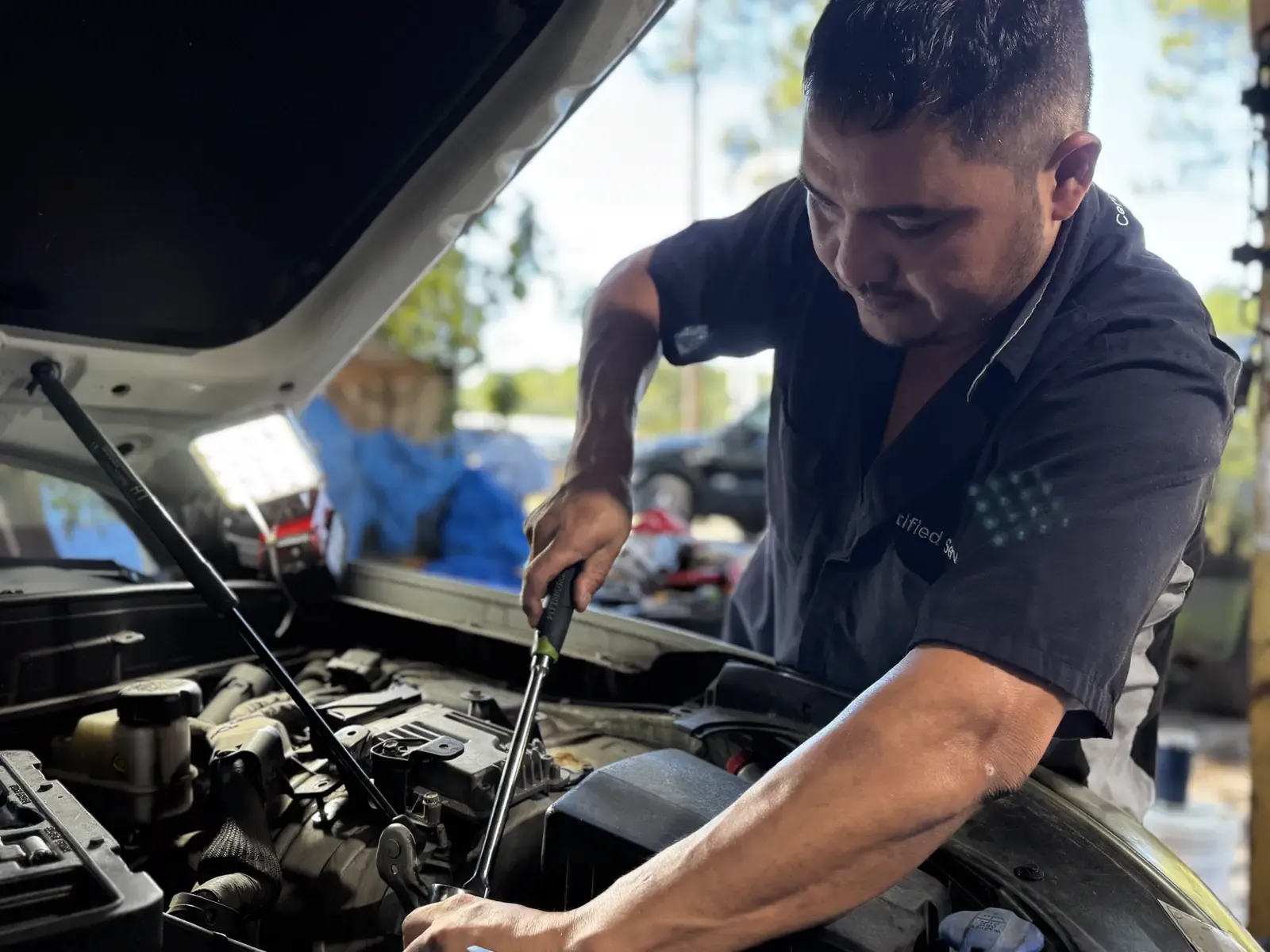
We come to your location when the situation allows it, check the basics first, and tell you what we find before any repair decision is made. If the problem needs equipment or time that a driveway or parking lot cannot support, we will say so and discuss the private service facility, which is available by appointment only.
Common symptoms
These are signs worth getting checked. They are not a diagnosis, and the same symptom can have different causes.
- The engine cranks but does not start
- Nothing happens, or you hear only a click, when you turn the key or press the button
- The engine starts and then stalls
- A check-engine or other warning light is on
- The vehicle runs rough, hesitates, or has lost power
- A new noise, smell, or leak you cannot identify
What assessment and repair may involve
- A conversation about when the problem started and what changed
- Visual inspection and basic electrical and fluid checks
- Scan-tool review of stored trouble codes where applicable
- Testing to confirm or rule out likely causes before recommending parts
- A clear explanation of what was found and which repairs make sense
Mobile visit or private facility?
Whether the work can be done at your location depends on the vehicle, the parts involved, the equipment needed, and whether the spot is level, safe, and permitted. Some work needs our private service facility, which is available by appointment only.
Often suited to mobile service
- Battery, starter, and charging-system checks
- Scan-tool code reads and initial troubleshooting
- Many repairs that can be completed with portable tools
May need the facility
- Problems that need to be tested over time or under repeated starts
- Work that needs a lift, a stable surface, or a vehicle left for hours or days
- Complex electrical or internal engine concerns
What to have ready
- Year, make, model, and engine if you know it
- What the vehicle does, and what it does not do
- Any warning lights or messages on the dash
- Recent repairs, a recent battery change, or a recent fuel-up
- Where the vehicle is parked and whether it can be reached safely
How requesting service works
- Call us or send a request. Share the vehicle, the symptoms, and where it is.
- We follow up. We confirm coverage, ask follow-up questions, and discuss whether a mobile visit or the facility fits.
- You decide. Service is scheduled only after we agree on a plan with you.
Submitting a request asks us to contact you about service. It does not confirm an appointment or dispatch. Contact us to confirm service coverage and availability.
Frequently asked questions
Can you tell me what is wrong over the phone?
Not reliably. We can discuss symptoms and suggest what to check, but a firm diagnosis requires looking at the vehicle.
What if the fix needs more than a mobile visit?
We will explain why and discuss whether the private service facility, available by appointment only, is the better option.
Is it safe to keep driving with a warning light on?
It depends on the light and how the vehicle is behaving. If the vehicle is overheating, losing power, or the brakes feel wrong, do not keep driving. Call us and we can talk through it.